
UKPokerFinder · Buy-in basics
Poker Buy-Ins, Fees and Guarantees Explained

A poker tournament buy-in is the amount you pay to enter an event and receive your starting chips. However, the advertised price, the money going towards prizes and your total spend can be different figures.
Before choosing a tournament, check the entry fee, prize pool, guarantee and rules for additional entries. This guide explains the basics with UK examples, so you can understand a listing before paying for your seat.
In this guide
What is a poker tournament buy-in?
In a standard tournament, the entry price buys a specified starting stack. Players compete for prizes under the published payout structure, rather than exchanging their chips for cash whenever they leave.
For example, a £60 Texas Hold’em tournament might give each player 20,000 chips. Those chips do not represent £20,000, and doubling your stack does not entitle you to withdraw £120.

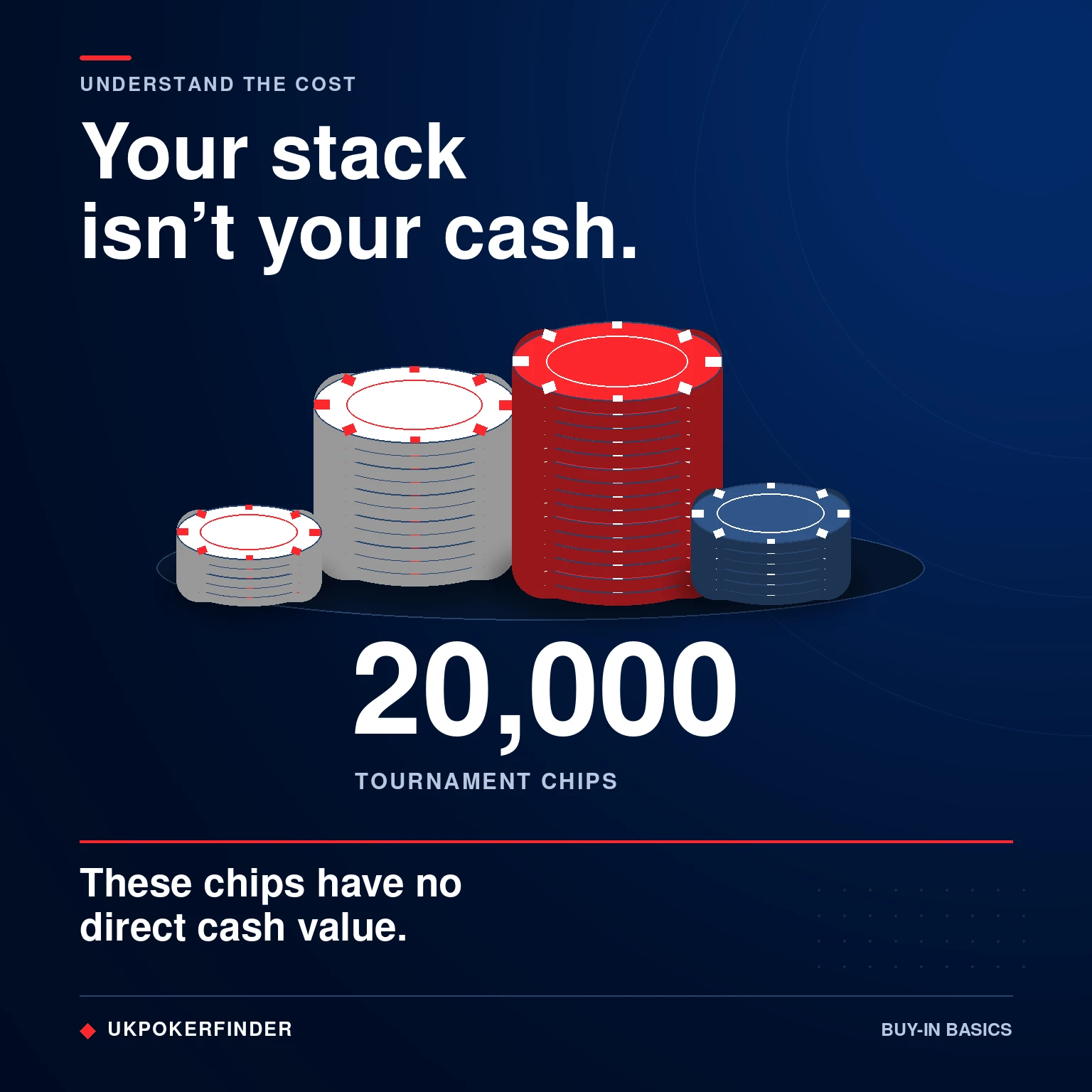
“Buy-in” sometimes means the complete entry cost and sometimes the prize-pool contribution before fees. Always check the breakdown rather than assuming every venue uses the term identically.
If you are new to live poker, our first live poker tournament guide explains registration, seating and table procedures.
How buy-ins differ in cash games
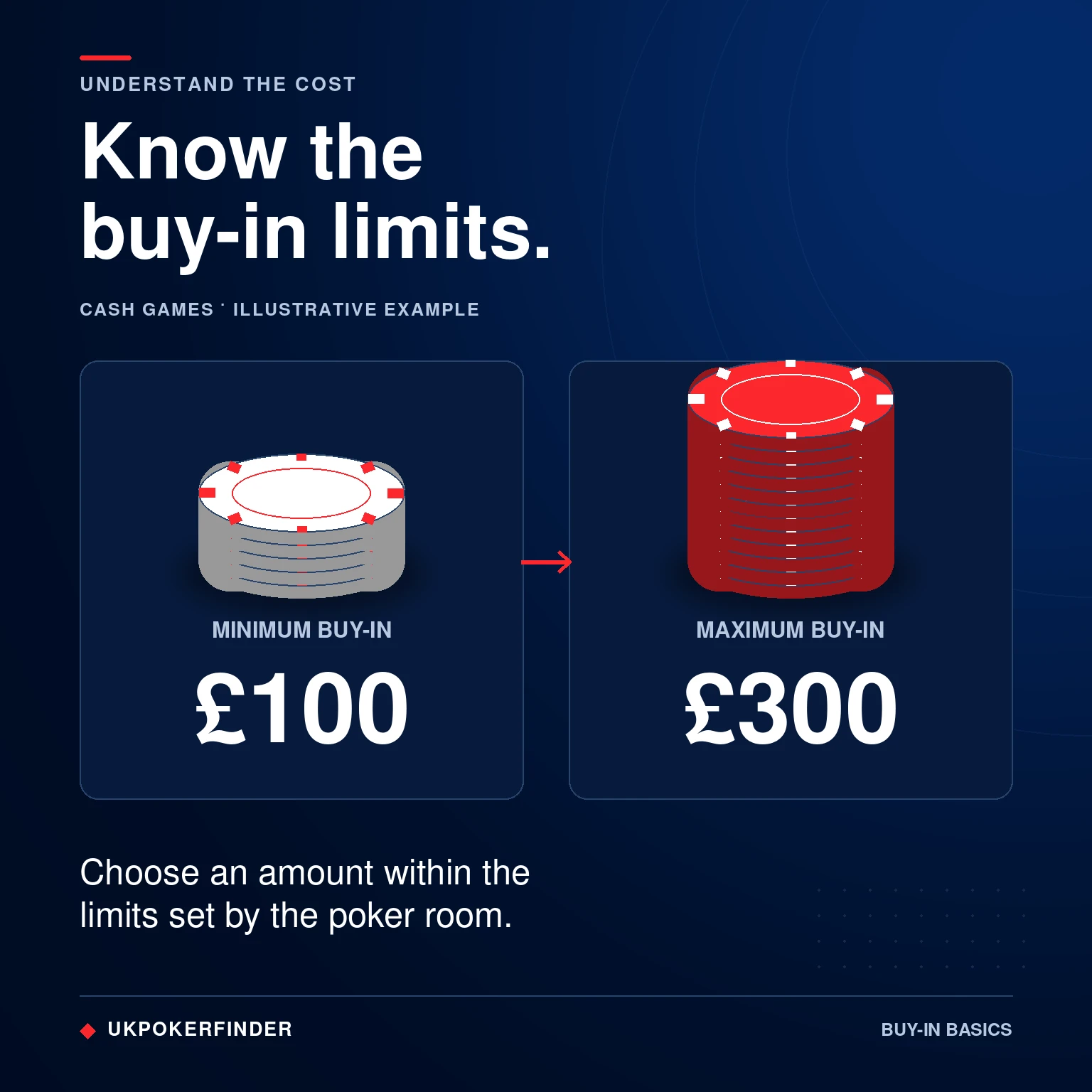
In cash games, chips represent money. If you buy £100 of chips, their starting cash value is £100. You can normally finish your session and cash out the value of your remaining stack.
Cash tables commonly have a minimum and maximum buy-in linked to their stakes and house rules. Players may choose different starting amounts within those limits.

Poker tournaments work differently: the starting stack is specified by the event, blinds usually increase, and prizes depend on its format and results. Tournament chips have no direct cash redemption value.
Entry fees and prize pools in poker tournaments
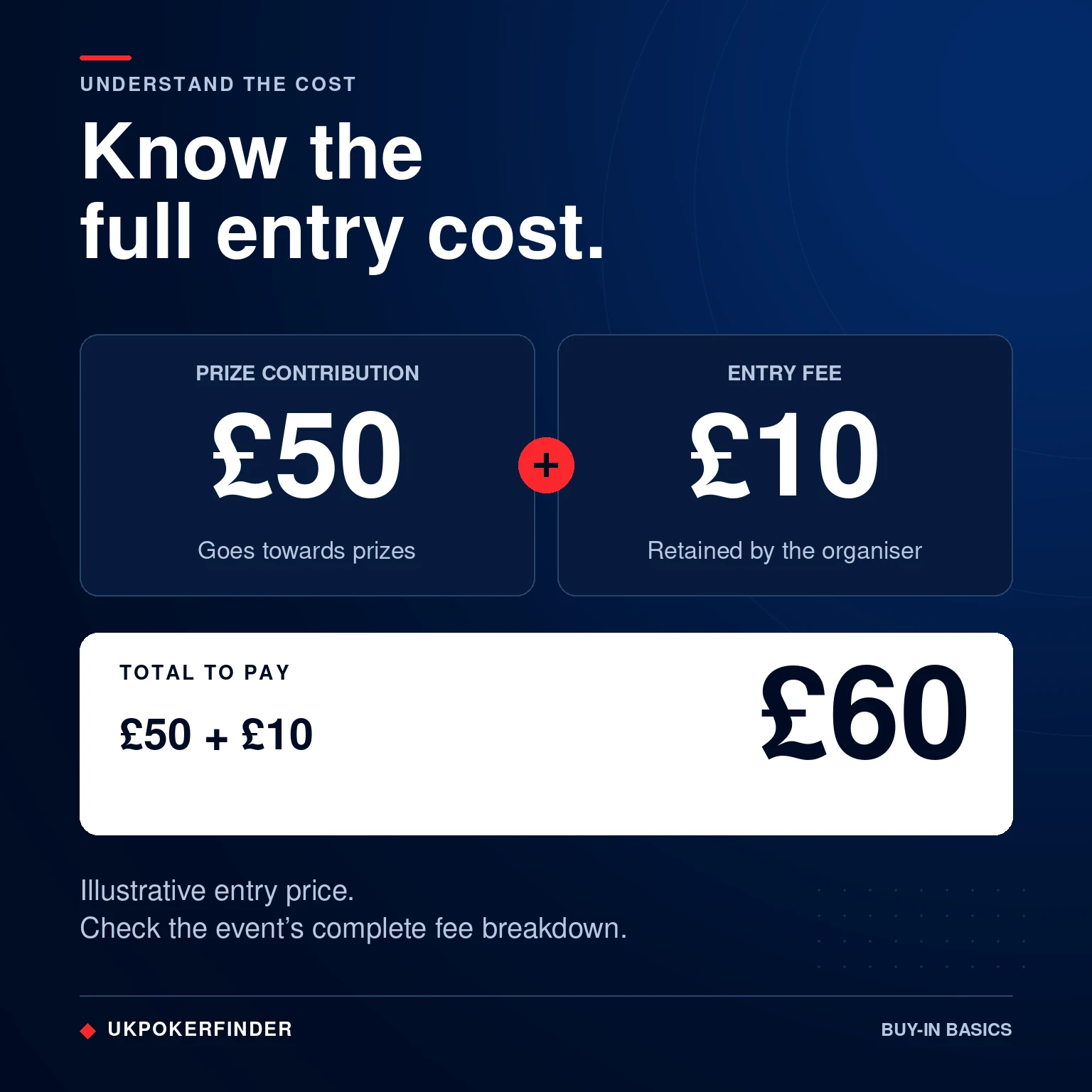
A listing showing £50 + £10 usually means £50 towards the prize pool and a £10 tournament fee: £60 to enter. The fee is retained by the organiser rather than added to that prize contribution.
If an event simply says “£60 buy-in”, check whether fees are included. Some structures also specify staff charges, promotional deductions or separate bounty contributions.
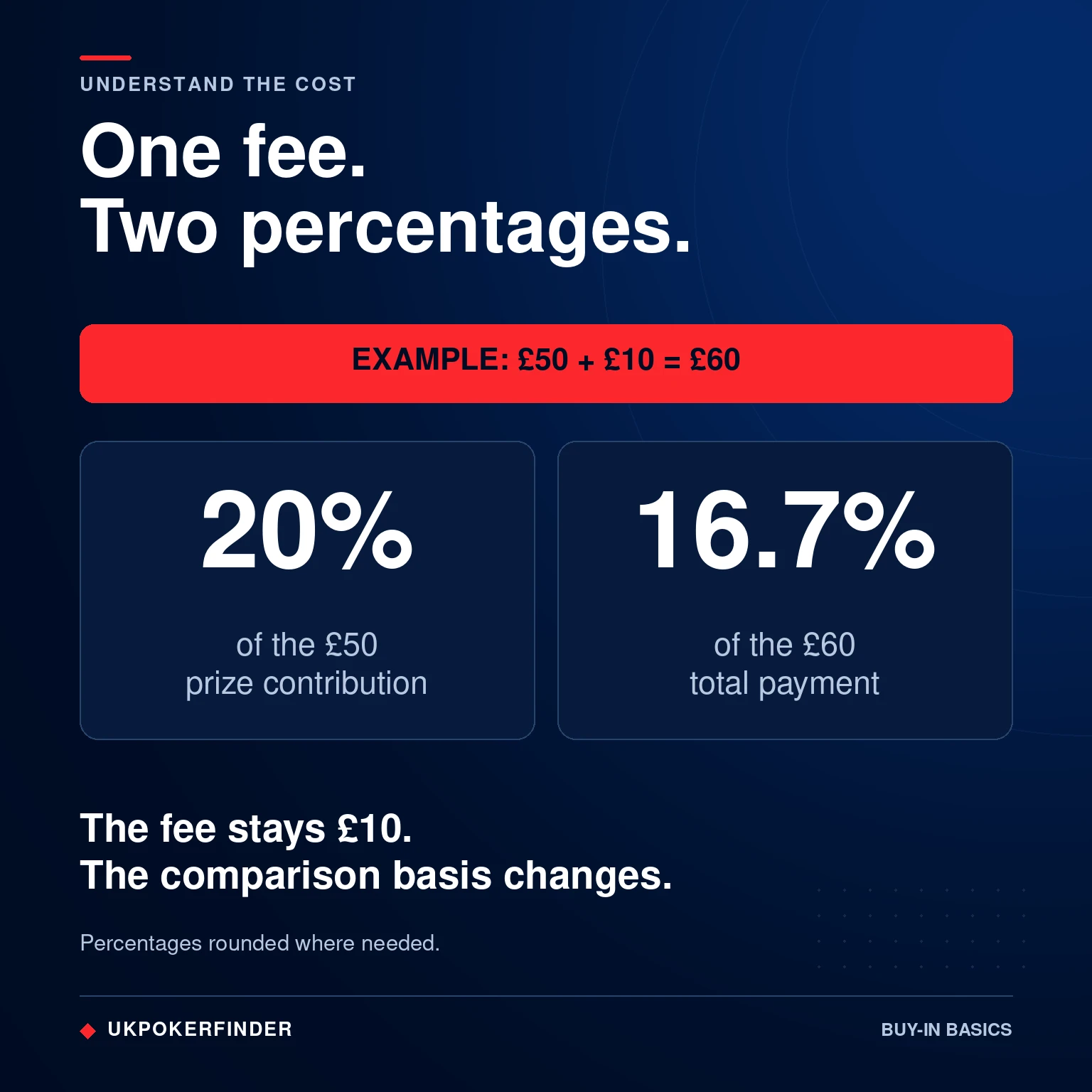
Be careful when comparing fee percentages. In the £50 + £10 example, the £10 fee equals 20% of the £50 prize contribution, but about 16.7% of the £60 total payment. Check which basis a comparison uses.
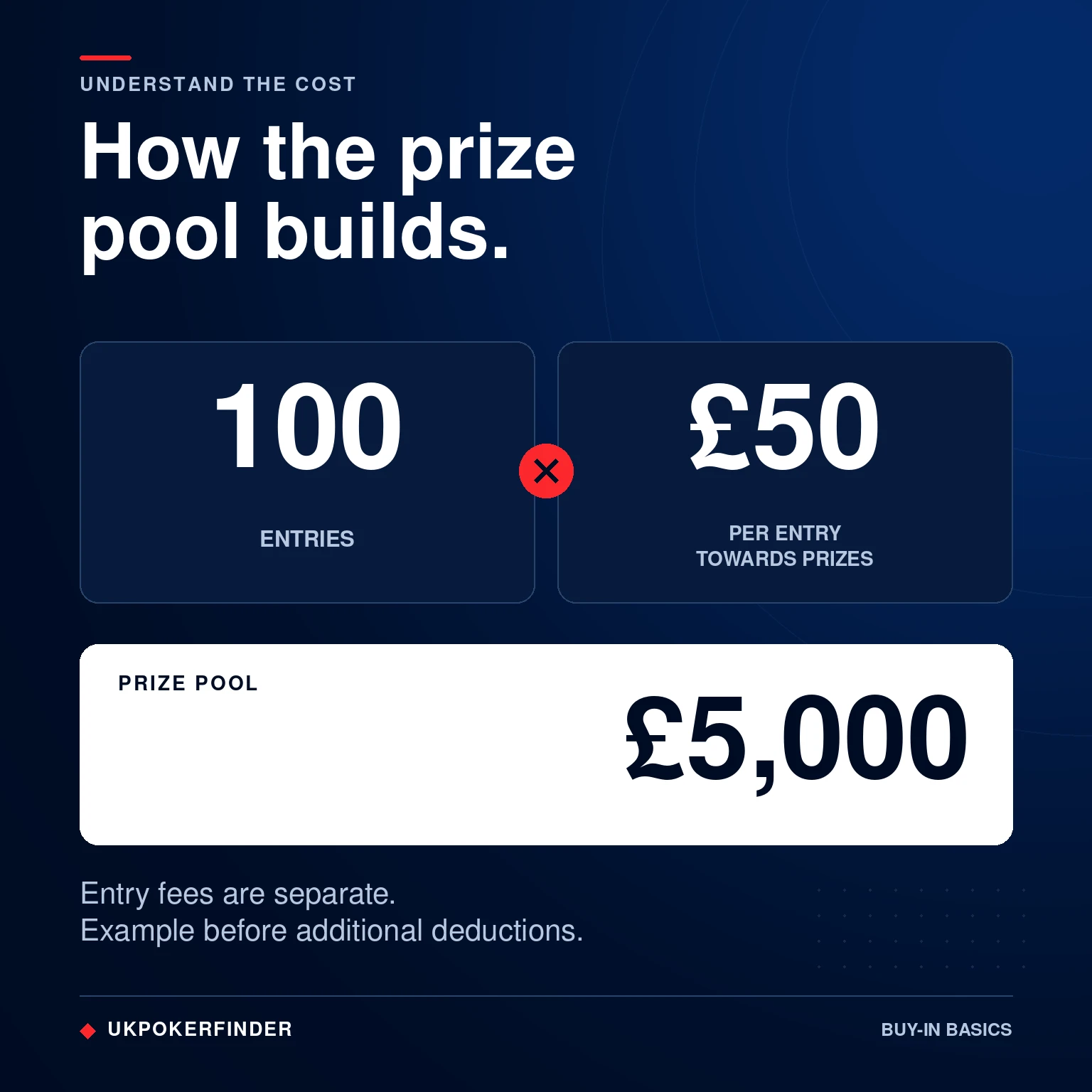
In a simplified example, 100 entries contributing £50 each generate £5,000 for prizes before any additional deductions. The £10 entry fees are not included in that calculation.
Count entries, not just individual players: someone entering twice creates two entries. Rebuys, add-ons and organiser contributions can also affect the final prize pool.
What does a guaranteed prize pool mean?
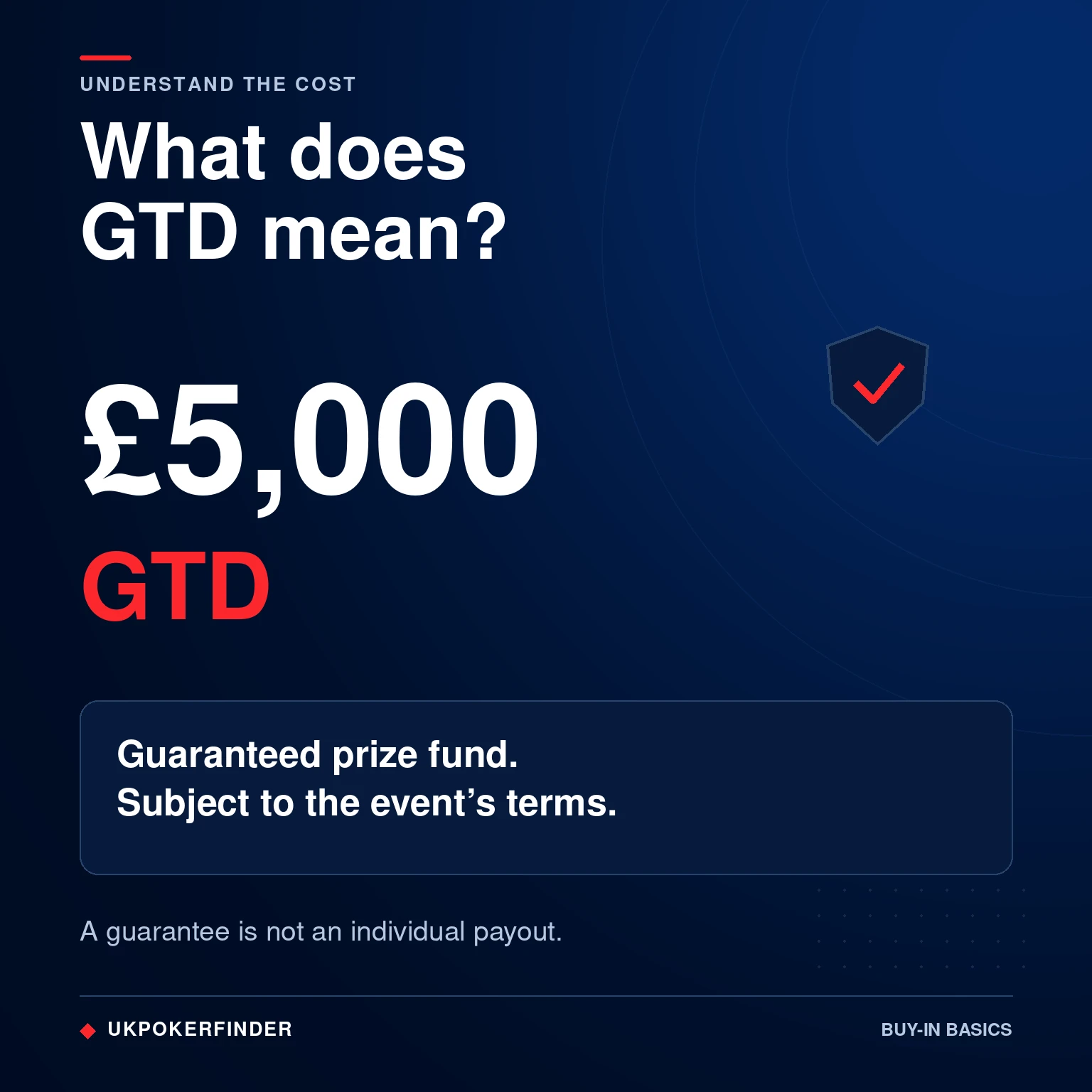
GTD means guaranteed. An advertised £5,000 guarantee sets a stated minimum prize fund under the event’s terms. It does not mean the winner receives £5,000 or that every entrant wins money.
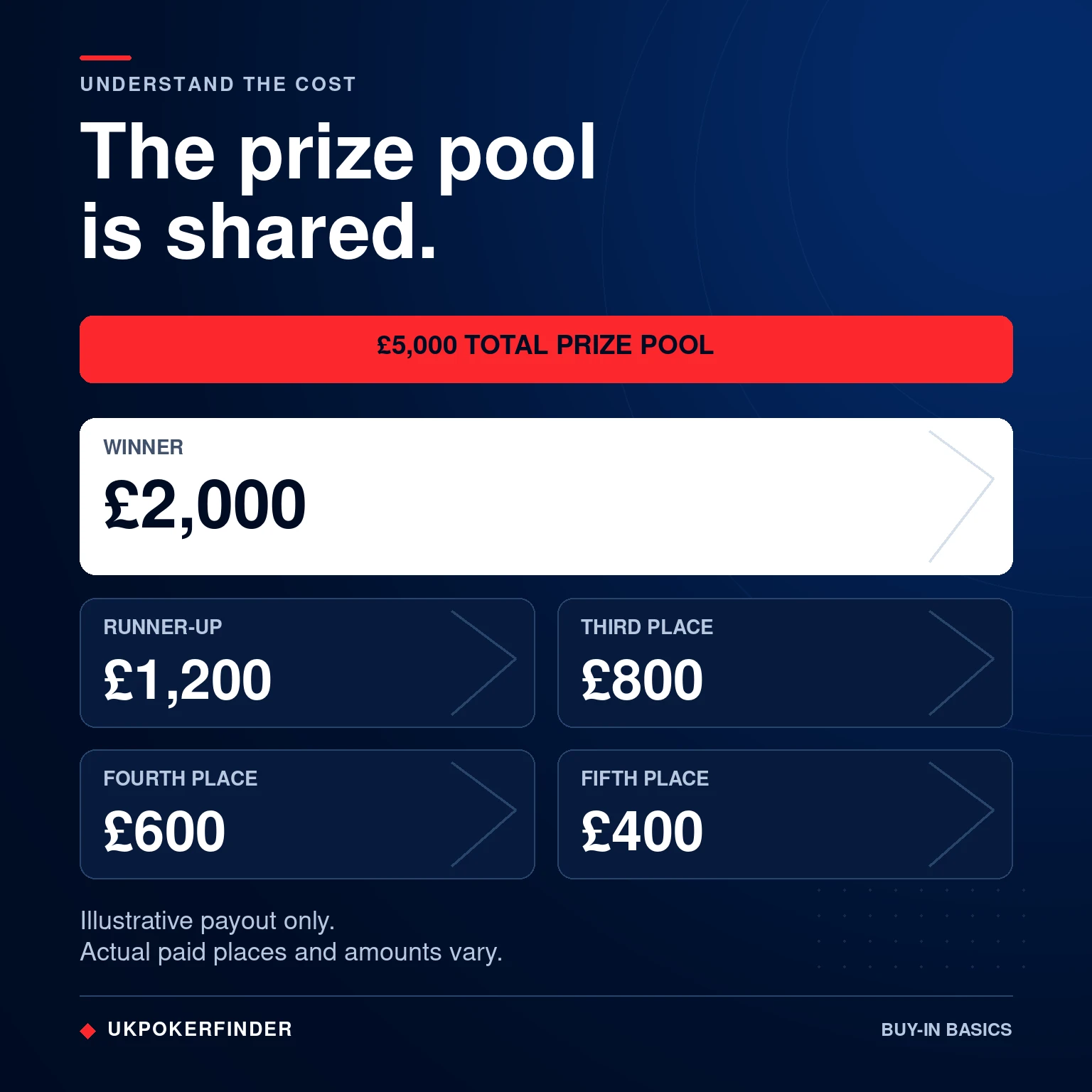
In a conventional tournament, prizes are shared among the paid finishing positions. Check the payout structure and whether awards include cash, seats or tickets for other events.
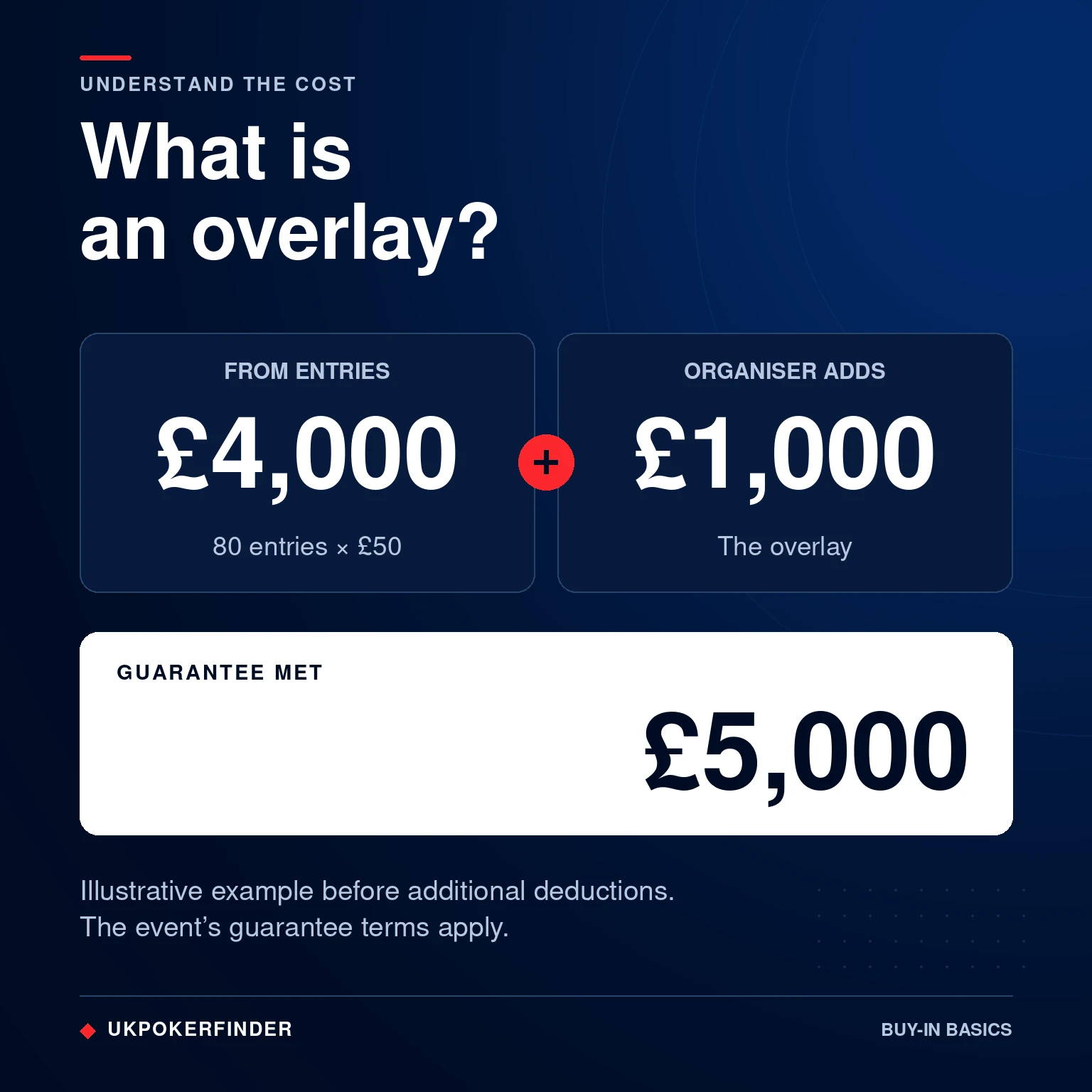
If eligible entry contributions fall below the guarantee, the organiser covers the qualifying shortfall. This additional contribution is called an overlay.
For example, assume no extra deductions: 80 entries contributing £50 generate £4,000. Meeting a £5,000 guarantee requires a £1,000 overlay. If contributions exceed the guarantee, the prize pool can grow beyond it.
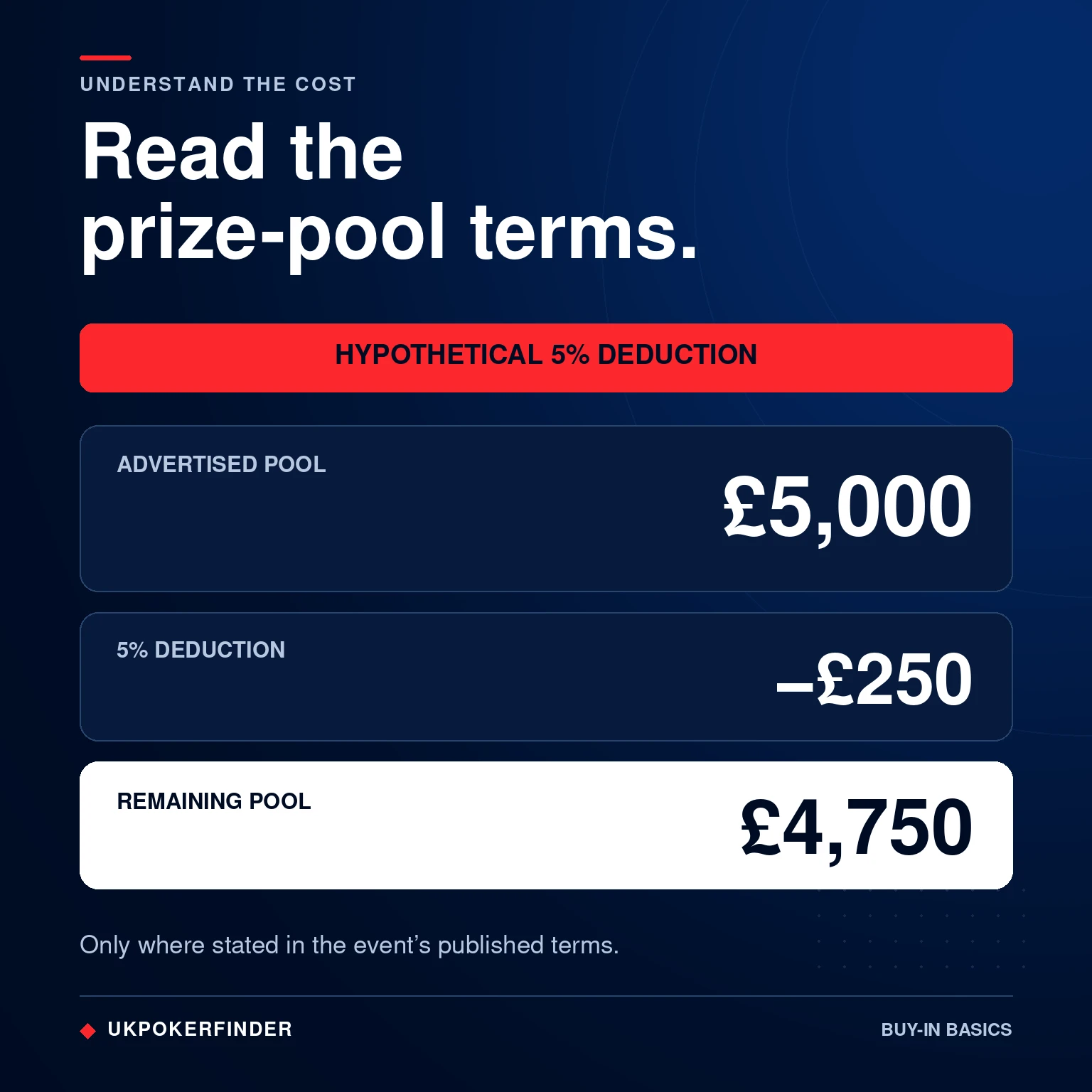
Read the small print: some UK operators apply published deductions to the final pool, including guaranteed events. Check whether the advertised guarantee is before those deductions. A large headline figure alone does not establish an event’s value.
How tournament formats change your total buy-in

Different tournament formats change how much you could spend. A freezeout ends your tournament when you lose your chips, with no second entry.
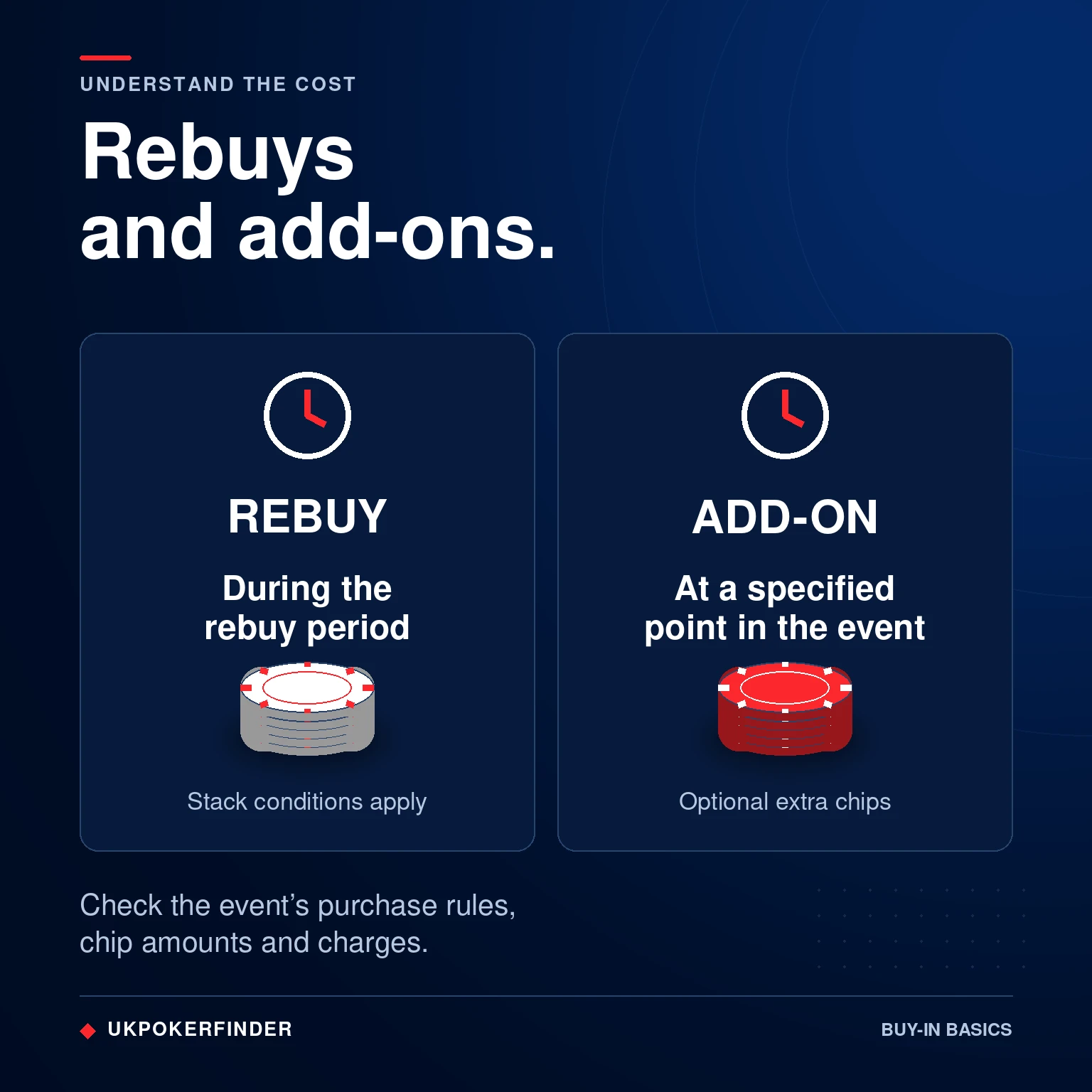
Rebuy tournaments permit additional chip purchases during a defined period, subject to stack and other conditions. An add-on offers an optional chip purchase at a specified point.
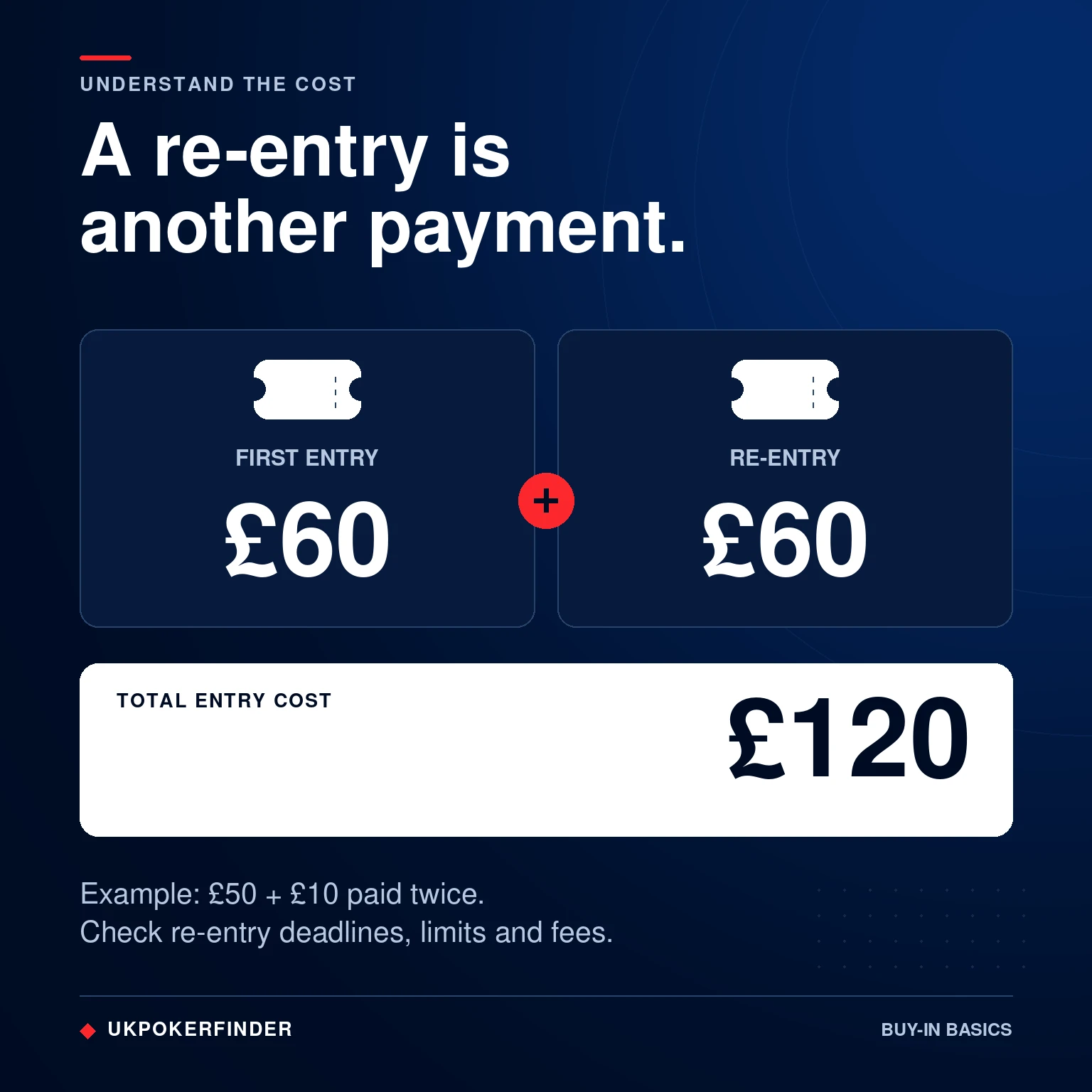
Re-entry tournaments allow another paid entry, usually following elimination, within the event’s limits. Entering a £50 + £10 tournament twice costs £120 if the same price applies each time.
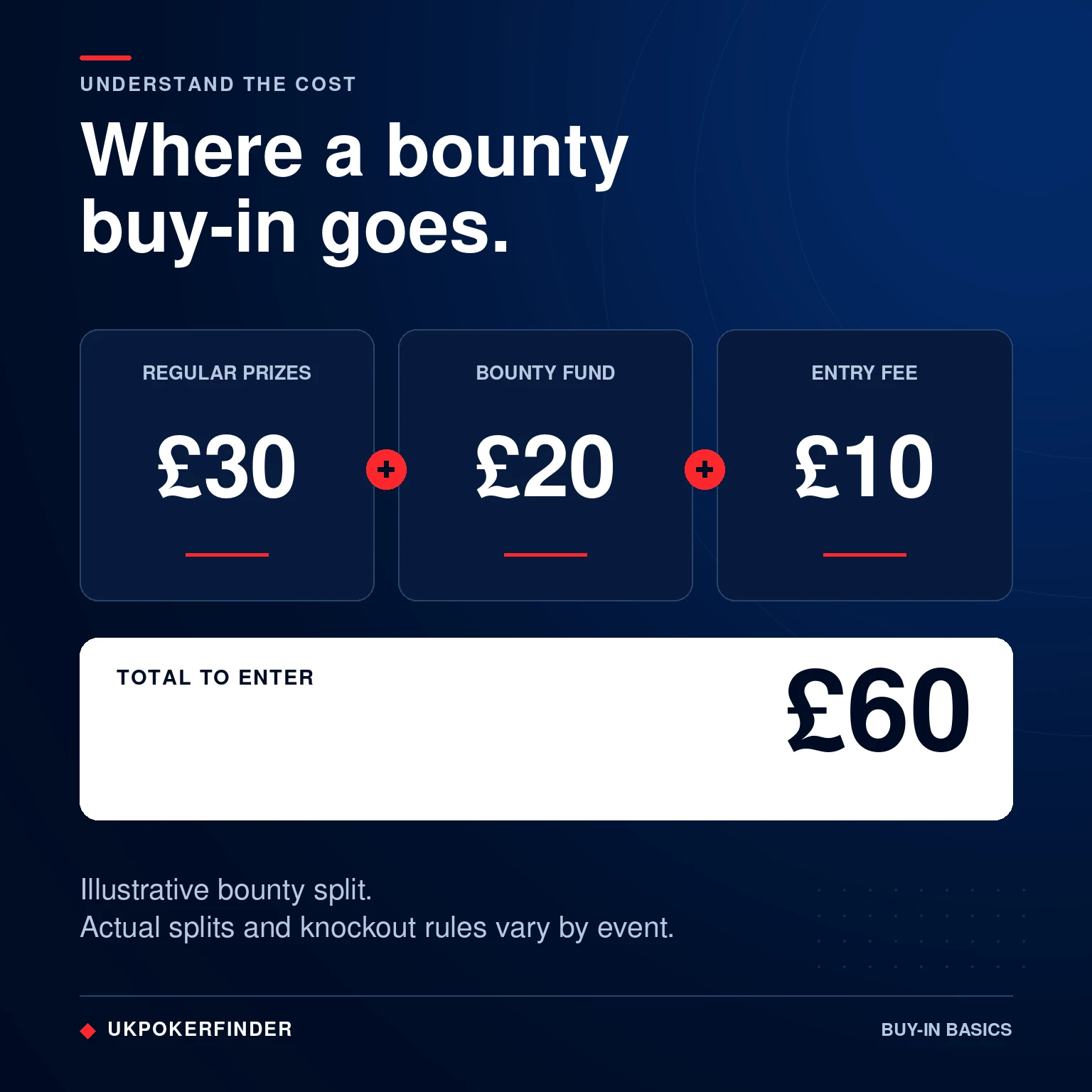
In bounty tournaments, part of the entry funds knockout prizes. Check the split between regular prizes, bounties and fees; it is not identical across events.

A satellite tournament usually awards entry into another event. Our online poker qualifiers guide explains this route. Check ticket conditions and travel costs; entering a satellite does not guarantee qualification.
Live poker tournaments and online poker tournaments
Both live poker tournaments and online poker tournaments can charge entry fees and offer different prize structures. Compare the actual breakdown rather than assuming either setting automatically offers better value.
For live poker, include travel, parking, food and accommodation where needed. A nearby evening game and a festival requiring several nights away have very different overall costs.
Online players should check the tournament currency, account requirements and any relevant conversion or payment charges. Read the event information before registration, even when the headline buy-in looks familiar.

How do you enter UK poker tournaments?
Start with our UK poker tournament finder to compare dates, locations and advertised costs. Then confirm availability and the latest entry arrangements directly with the organiser.
Many open events accept direct registration without qualifying first. Depending on the venue, you may register in person or through an official booking service. Check identification requirements, payment methods and registration deadlines before travelling.

If you miss the start, late registration may be available, but it has a deadline. Check how your starting stack compares with the current blinds before deciding to join.
Review the schedule, regular breaks and any return days. A tournament’s advertised starting time does not guarantee a fixed finishing time, so plan your journey home accordingly.
Choosing a buy-in at UK poker rooms
Choose an amount you can comfortably afford to lose. Higher buy-ins increase the money at risk; they do not guarantee a better experience, easier competition or a profitable result.
Compare the full entry cost, starting stack relative to the blinds, level length and permitted extra purchases. For beginners, a clear structure and manageable budget matter more than the promise of huge prizes.
A starting stack of 20,000 at blinds of 100/200 gives you 100 big blinds. The same stack at 500/1,000 gives you just 20, despite the identical headline chip count. This matters when comparing different live events.
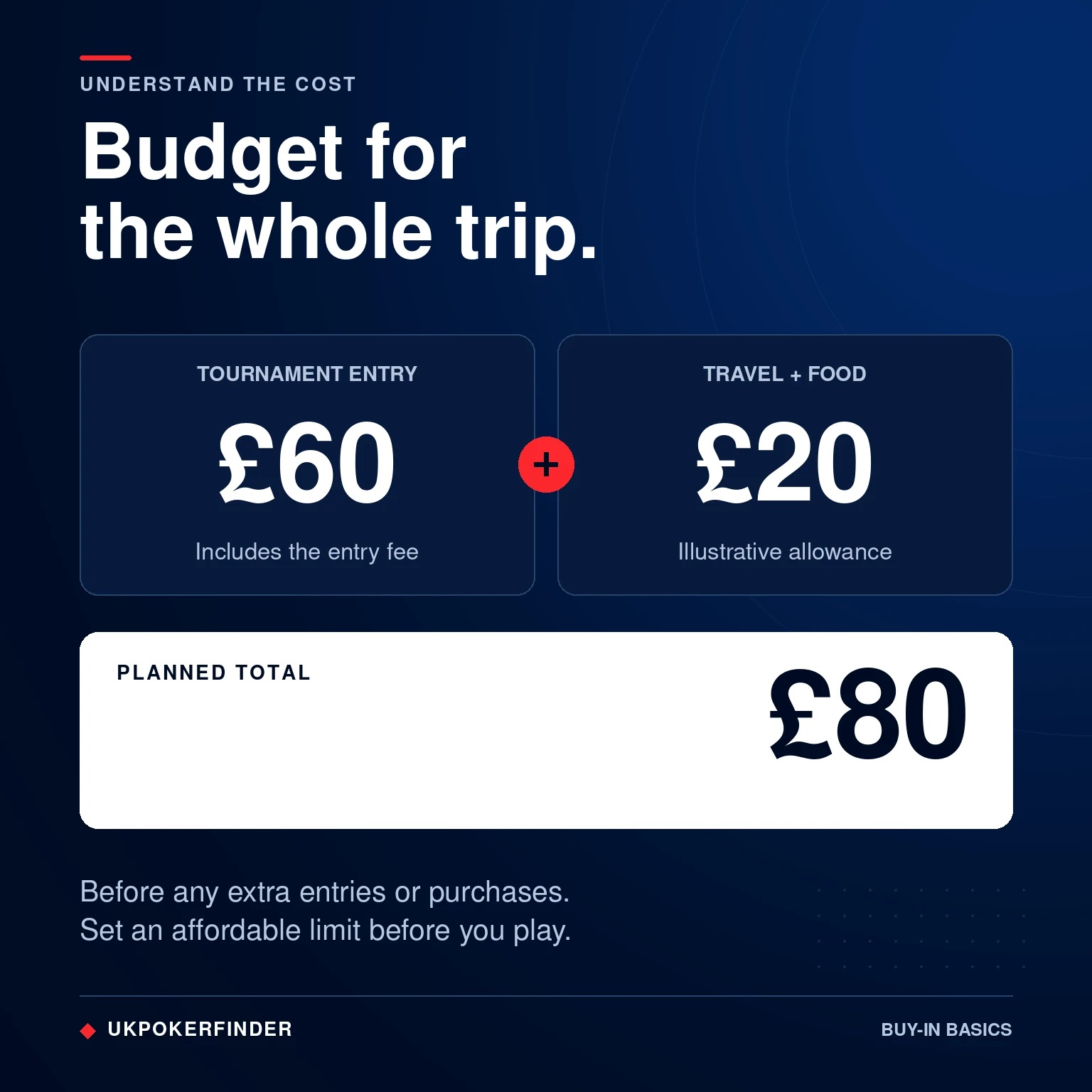
Set your maximum total spend before registering. For example, a £60 entry plus £20 for travel and food means budgeting £80 before any further purchases. Keep essential living expenses separate.
You are not obliged to use an available re-entry. Decide beforehand whether your budget covers one entry or allows another attempt.
Use our UK poker rooms and venues directory to explore options, then confirm the official details. Whether you prefer London casinos or a local poker room, understand the complete cost before taking your seat.
18+. Play within your limits, never chase losses and read our responsible gambling information if you need support.
Find your next live game.